Yuriko Kimura
Executive Art Director
2003
Joined Gramco
As AI rapidly spreads and companies across all industries face the question of “how to make the most of it,” the fields of design and branding are no exception. While efficiency and speed have improved dramatically, the “human touch” and “sensitivity” at the core of every brand have become even more important. In this interview, we speak with Yuriko Kimura, Executive Art Director at Gramco, who has led the creation and management of numerous brands. We asked how she has embraced the wave of technology, and where creativity is headed in the age of AI. The first installment covered the controversies and challenges around AI adoption. This second part dives deeper into memorable case studies, the future of branding, and how these developments tie back to business management.
The first installment covered the controversies and challenges around AI adoption. This second part dives deeper into memorable case studies, the future of branding, and how these developments tie back to business management.
— Are there any AI-related projects that left a strong impression on you?
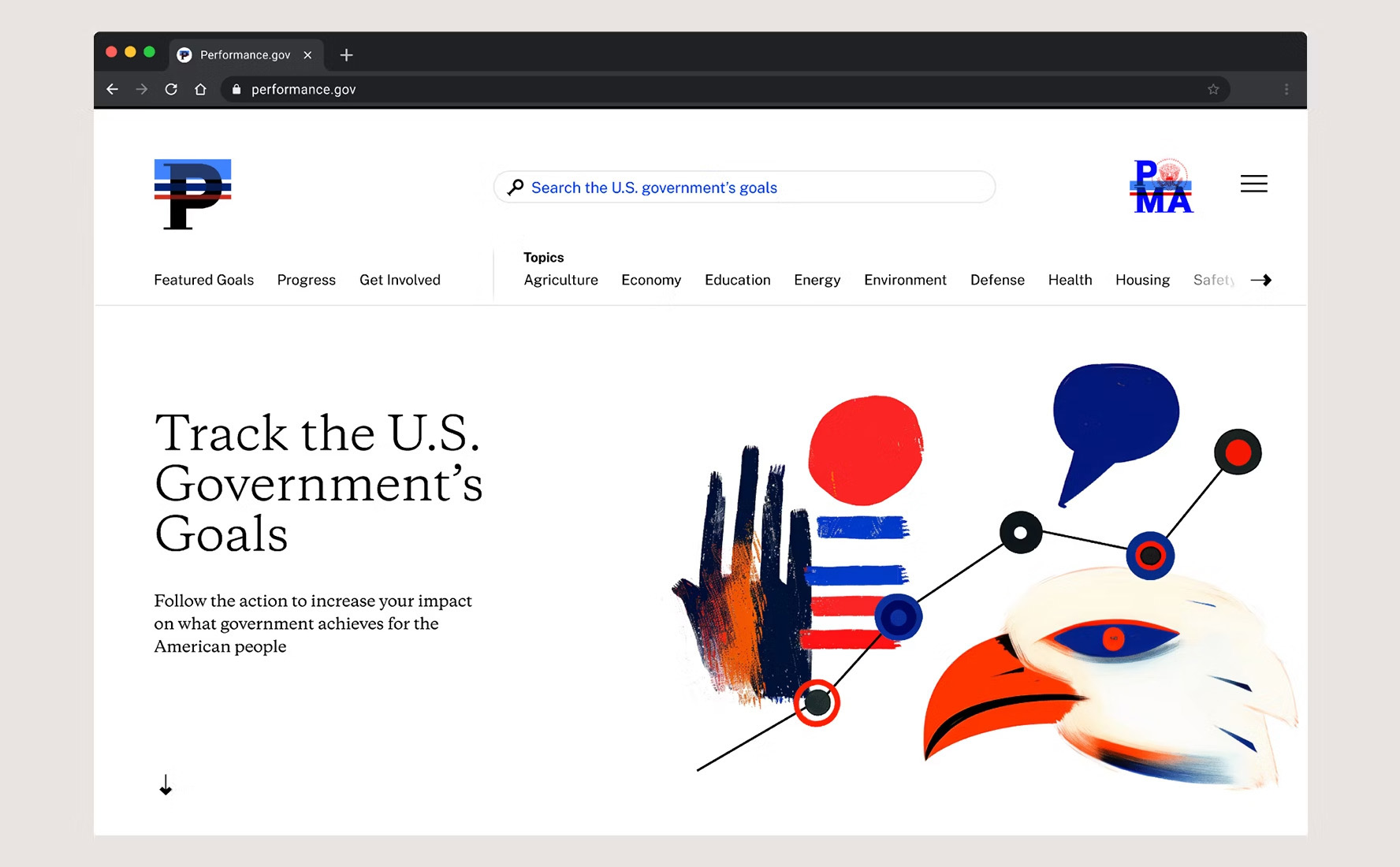
Kimura: One example that stood out was the U.S. government website redesign led by Pentagram. It wasn’t just a refresh—it addressed a major social issue: democratizing access to information.
Government documents were traditionally long and difficult to read, creating a barrier for citizens. By using AI to summarize content and optimize headlines and text volume, the site was transformed into something anyone could understand.
Rather than pushing a designer’s aesthetic, the team prioritized the core objective: ensuring citizens could access information.
The key point is that AI itself did not create the value. What mattered was clearly defining the “problem–purpose–design” structure and integrating AI at the right points.
For designers and brand practitioners, the challenge is in deciding “where AI should be used” and “at what level of control.”
From a business perspective, this resembles the difference between using technology purely for efficiency and turning it into a new competitive advantage.
Kimura: I believe Japanese companies can do the same. But the prerequisites are clear rules and education. I often compare AI to a “high‑IQ new employee.” With proper guidance, it can deliver extraordinary results—provided the organization sets policies and trains people.
Japan has advanced AI use on the individual level but lags in organizational adoption. Concerns around security and responsibility slow down implementation, widening the gap with overseas markets.
From a management standpoint, delayed investment leads directly to loss of market share.
Now more than ever, companies need a “common language for AI use.”
Creating usage guidelines, assigning responsible leaders, and conducting employee training are essential. In Europe, many companies are already offering AI literacy programs. Japanese companies must follow suit—or risk losing competitiveness in just a few years.
— What is your view on the relationship between designers and AI?
Kimura: A brand is not a short‑term campaign; it is an asset built over 10 or 20 years. That’s why AI should not be treated as a mere convenience tool but as something that can enhance long‑term brand value.
Logos and visuals are just the “containers” of a brand. The real essence is the story behind them—and whether people can narrate that story responsibly in line with the brand's purpose.
A while ago, simply saying “This was made with AI!” created buzz. But now that AI is commonplace, the question has shifted to: “How will we use the output to strengthen the brand?”
Companies that use AI not just for efficiency but as a means to enrich their brand story will gain an advantage in the next era.
— Are there areas that AI simply cannot take on?
Kimura: I believe that understanding the essence of a brand—the emotions, intentions, and background embedded in its concept—as well as interpreting and visualizing that essence, is largely dependent on human sensibility. To truly grasp this essence, you must digest the client’s unique culture, history, and the nuances contained in their language.
For example, even a simple word like “innovative” differs by client. To visualize it properly, you must dig deeper into “what innovation means for that specific client”, and then translate that into concrete creative output. This is something AI cannot easily replace.
The ability to distinguish what is “good” is also essential. In the design world, even adjusting whitespace by a few millimeters can drastically change the impression. AI excels at executing numerical instructions, but it cannot judge the delicate balance, the subtractive elegance, or the sense of “comfort” and “beauty” that come from intentional whitespace. These are things only human sensitivity can perceive.
Furthermore, branding creativity is not “finished once produced”—it begins there. Over time, the assets must be used across various media to communicate with different stakeholders. This requires not only maintaining quality, but ensuring the creative assets express the brand’s uniqueness while also offering usability across all brand communications. Envisioning all the detailed use cases, seeing the system as a whole, and building creative that functions as a system—these are things only humans can do.
At Gramco, our purpose is “Inspire people, organizations, and the world.” Our strategy and creative teams work together daily to help brands build emotional connections with their stakeholders—connections that earn empathy and move people’s hearts. To create such emotionally resonant design, the human aspect is indispensable.
AI can generate a large number of ideas, but it is humans who add depth, narrative, humanity, and coherence across the whole system. In other words, direction is crucial. AI is only a tool; what truly matters is whether humans can take responsibility and guide it toward outcomes aligned with the brand’s purpose.
In brand-building, trust and empathy shift depending on who takes responsibility for creating the brand. Clients and consumers seek someone who understands context and can be accountable. In the future, more people will produce “AI‑generated” work, but without stories or individuality behind it, they cannot build long-term relationships with stakeholders. And when comparing a brand people create themselves with one generated by AI, the emotional energy with which people speak about the brand will differ.
In the AI era, the boundaries of responsibilities that humans must carry will only become clearer.

— What responsibilities will humans continue to hold in the AI era?
Kimura: Direction is the most important skill. AI is a tool. What matters is whether humans can guide it toward the brand’s purpose and take responsibility for the outcome.
Brand trust depends on who takes responsibility. Consumers seek someone who understands context and can be accountable. AI will enable many people to produce “AI‑generated designs,” but without a story or individuality, they cannot build long‑term stakeholder relationships.
In fact, the role that only humans can play will become even clearer in the AI era.
Kimura: I encourage young designers to experiment with AI. Sometimes you’ll be amazed, other times you’ll feel “humans are still better.” Both experiences are valuable lessons.
Most importantly, sharpen your own sense of aesthetics. Knowing what feels comfortable or exciting to you becomes the foundation for creating unique output.
Because AI is everywhere, people with their own strong criteria will shine even more. Branding is about building emotional connections. Only humans can create design that moves people’s hearts. AI as a Partner—But Human Responsibility Remains Central
◇
AI is not a threat; it is a partner that expands creative possibilities. But misusing it risks damaging brand value.
That is why companies and designers must engage in discussion, set rules, and build collaborative frameworks now.
In the AI era, the future of a brand depends on two things: Using AI in line with a clear purpose Humans taking responsibility for the brand’s narrative
For leadership, AI should not be viewed only as an efficiency tool—it must be positioned as a strategic asset for long‑term brand building.

Executive Art Director
2003
Joined Gramco
Gramco Insights 09
2026.01.13
Gramco Insights 08
2025.12.08
Gramco Insights 08
2025.11.24